



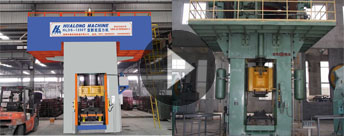
The dense molding, corrosion resistance and shock resistance of the magnesium-aluminum spinel brick, which is produced by the servo screw press, constitute the core quality of the long-lasting furnace lining.
Author: haloong Time: 2026-04-29 14:02:05
Magnesium-aluminum spinel bricks, as a core high-end category of alkaline refractory materials, are made from high-purity magnesium oxide and aluminum oxide as the main raw materials, through precise proportioning, high-pressure molding, and ultra-high-temperature sintering. The main crystal phases are composed of periclase and magnesium-aluminum spinel. They possess multiple core characteristics such as extremely strong thermal shock stability, excellent resistance to cement clinker erosion, high high-temperature load-softening temperature, dense and wear-resistant structure, and good high-temperature volume stability. For a long time, this type of brick has been the preferred refractory material for the firing zone and transition zone of new dry-process cement rotary kilns, high-temperature furnaces in steel metallurgy, non-ferrous metal smelting furnaces, and glass regenerators, directly determining the operation cycle, production energy consumption, and maintenance costs of industrial furnaces.
The long-term service performance of magnesium-aluminum spinel bricks does not lie in the later sintering process, but in the uniformity and density control of the green body during the molding stage. The coarse and fine aggregate gradation of the magnesium-aluminum spinel mixture is complex, the dry pressing of the powder is difficult to exhaust air, and the molding compression ratio is high. If the molding pressure fluctuates greatly, the pressure application is uneven, and the rigid impact is strong, it is very easy to cause problems such as internal delamination, local porosity, corner material deficiency, and density polarization in the green body. Even if the high-temperature sintering process is strictly controlled later, it cannot make up for the molding defects, and the final product will have high-temperature cracking, structural spalling, and rapid decline in erosion resistance, significantly shortening the furnace maintenance cycle and increasing the cost of enterprise shutdown and brick replacement.
Zhengzhou Haloong Machinery Co., Ltd. has been deeply engaged in the research and development and manufacturing of refractory material molding equipment for 45 years. It has accurately grasped the raw material characteristics and core difficulties of the molding process of magnesium-aluminum spinel bricks. Relying on the third-generation permanent magnet synchronous servo direct drive core technology, it has customized and optimized the HLDS series servo screw press, with multiple core advantages such as digital precise pressure control, flexible static pressure transmission, and intelligent process adaptation, solving the quality shortcomings of the green body of magnesium-aluminum spinel bricks from the molding source, and assisting domestic and foreign refractory material enterprises in mass-producing high-quality and long-life spinel refractory products.
Zhengzhou Haloong, based on the specific molding process requirements of magnesium-aluminum spinel bricks, has abandoned the old transmission and pressure control mode of traditional equipment. With the core configuration of permanent magnet synchronous servo direct drive technology + static pressure flexible transmission structure + refractory material-specific intelligent numerical control system, it has upgraded and optimized the servo screw press, specifically solving the pain points of the entire chain of spinel brick molding, ensuring uniform green body density, dense structure, and no delamination or cracking from the source, helping enterprises to produce high-quality, high-qualified, and long-life magnesium-aluminum spinel brick products.
The equipment is equipped with Haloong's self-developed permanent magnet synchronous servo direct drive system, without low-efficiency and easily damaged transmission components such as friction discs and clutches. The transmission chain is short, and energy transmission is loss-free. The repeated control accuracy of the molding impact energy is ≤±1%, and the pressure output is fully digitally and precisely controllable. In response to the characteristics of magnesium-aluminum spinel mixture being difficult to exhaust air and having a complex gradation, it can be set to a one-click light pressure pre-exhaust, step-by-step progressive pressurization, and stable pressure densification step-by-step molding process, slowly exhausting the internal air of the material, gradually compacting the aggregates and fine powders, ensuring that the green body has no density deviation from the center to the corners and a uniform and stable porosity rate. After sintering, the finished product has a dense structure, firmly combined crystals, significantly improved thermal shock resistance and clinker erosion resistance, and a significantly extended service life of the lining.
It adopts a fully enclosed static pressure screw nut heavy-load transmission structure, forming a stable high-pressure oil film protection throughout the operation, achieving flexible uniform force and slow pressure molding, completely eliminating the rigid impact pressurization drawbacks of traditional equipment. The pressurization process is smooth and gentle, with uniform and gentle force application. It not only does not damage the gradation of the spinel material aggregates but also slowly exhausts air and compacts, completely eliminating quality defects such as delamination, micro-cracks, and corner damage in the green body, significantly increasing the finished product integrity rate, minimizing the waste rate of high-purity raw materials, and laying a solid foundation for the high quality of spinel bricks from the molding stage. Breaking through the structural limitations of traditional press machines with fixed bottom dead centers, this machine adopts a step-by-step forging forming mode. It can flexibly and precisely adjust the slider stroke, pressing depth and forming force according to the different specifications, special-shaped structures, raw material ratios and density requirements of magnesia-alumina spinel bricks, perfectly adapting to the forming production of all types of products such as straight bricks, wedge-shaped bricks and special-shaped combination bricks for kiln mouths. Coupled with a rapid mold changing structure, it enables convenient and efficient production changeover and debugging, catering to both small-batch customized production and large-scale standardized mass production, helping enterprises flexibly expand market orders.
The equipment is equipped with a dedicated process parameter database for magnesia-alumina spinel bricks, which includes the optimal forming parameters for spinel bricks of different ratios, specifications and working conditions. Operators can start production with a single click to retrieve the parameters, eliminating the need for repeated debugging and relying on manual experience. All forming data can be permanently saved and reused in batches, with full digital control of production quality to ensure that the density, size and compactness of each batch of brick blanks are highly uniform, and the product quality is stable and meets standards, easily passing the strict quality inspections of domestic and international high-end customers.
It adopts a servo motor on-demand start-stop intelligent working mode, with the motor running only during the pressing operation. The entire process of feeding, demolding and standby is zero energy consumption, achieving a comprehensive energy-saving rate of over 55% compared to traditional friction presses, significantly reducing the production electricity cost for enterprises. The static pressure transmission structure has minimal wear, and is equipped with a fully automatic forced lubrication and oil shortage alarm device, resulting in a low failure rate and long service life of the equipment, with a reduction of over 40% in later maintenance and operation costs. It combines production quality improvement and cost reduction, meeting the green and low-carbon development policy requirements of the refractory materials industry.
The equipment is standardly equipped with standardized industrial communication interfaces, which can be seamlessly linked with automatic feeding machines, precise material distribution machines, intelligent demolding machines, blank detection and automatic palletizing equipment to build a fully automated intelligent forming production line for magnesia-alumina spinel bricks, achieving unmanned operation throughout the process from material distribution, pressing, pressure holding, demolding to transfer, reducing quality errors and blank damage caused by manual intervention. It supports remote parameter debugging, production monitoring, fault warning and data traceability, facilitating domestic and foreign customers to manage production remotely, and meeting the intelligent and digital transformation needs of modern refractory enterprises.
Zhengzhou Haloong Machinery has been deeply engaged in the field of refractory material forming equipment for 45 years, always focusing on the core pain points of various high-end refractory material forming processes. With technological innovation as the core and improving customer quality and reducing costs as the goal, it continuously iterates the core technology of servo screw presses. The HLDS series of dedicated servo presses for magnesia-alumina spinel bricks have a complete range of tonnages and can provide one-to-one customized forming solutions as needed, fully adapting to the production needs of large, medium and small refractory enterprises.


