



Forging High-Quality Cranks: How to Significantly Reduce Electricity Costs?
Author: haloong Time: 2025-12-05 10:57:57
Cranks are critical components in automotive, marine, and industrial machinery, where their precision, strength, and durability directly impact the performance and safety of the entire equipment. Forging, as the preferred manufacturing process for high-quality cranks, involves high-energy consumption, with electricity costs accounting for a considerable proportion of the total production expenses. In the context of rising energy prices and increasing emphasis on green manufacturing, optimizing the forging process to reduce electricity costs while ensuring crank quality has become a top priority for many manufacturers. This article explores practical strategies to achieve this dual goal.
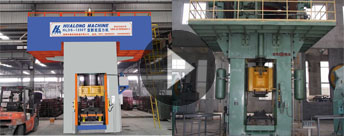
First and foremost, selecting the right forging equipment is the foundation for balancing quality and energy efficiency. Traditional forging machines often suffer from low energy utilization rates due to their outdated drive systems, which waste a great deal of electricity during idling and operation. In contrast, servo-driven forging presses have emerged as game-changers in this field. These machines adopt advanced servo control technology, which enables precise adjustment of the slide speed, force, and stroke according to the specific requirements of crank forging. Unlike conventional presses that run at a fixed speed regardless of the forging stage, servo-driven models can slow down during the critical forming phase to ensure forging precision and speed up during the return stroke to improve production efficiency. More importantly, they consume electricity only when in motion, minimizing energy waste during idling. Statistics show that servo-driven forging equipment can reduce electricity consumption by 30% to 60% compared to traditional models, while also enhancing the consistency of crank forgings.
Secondly, optimizing the forging process parameters is another key factor in reducing electricity costs. The forging of cranks involves multiple stages, including heating, upsetting, forming, and trimming. Each stage has specific energy requirements, and irrational parameters can lead to excessive energy consumption. For example, overheating the blank not only wastes electrical energy used for heating but also affects the mechanical properties of the crank, increasing the risk of cracks and deformation. Therefore, manufacturers should adopt precise temperature control systems to ensure that the blank is heated to the optimal forging temperature. Additionally, by simulating the forging process using finite element analysis (FEA) software, manufacturers can optimize the stroke length, forging speed, and force application points, reducing unnecessary energy input. For instance, optimizing the upsetting stage to minimize the deformation resistance can significantly reduce the electrical load on the forging press, thereby lowering energy consumption.
Thirdly, implementing energy-saving measures in the production environment and auxiliary systems can further reduce electricity costs. For example, installing variable frequency drives (VFDs) on auxiliary equipment such as fans, pumps, and conveyors can adjust their operating speed according to actual needs, avoiding the energy waste caused by constant-speed operation. Moreover, improving the thermal insulation of heating furnaces can reduce heat loss, thereby reducing the electricity required to maintain the furnace temperature. Regular maintenance of forging equipment is also essential; worn parts, loose connections, and poor lubrication can increase the equipment's energy consumption. By conducting regular inspections and replacing worn components in a timely manner, manufacturers can ensure that the equipment operates at peak energy efficiency.
Furthermore, adopting automated and intelligent production lines can contribute to energy savings in crank forging. Automation systems can realize seamless coordination between different production stages, reducing idle time of equipment and improving production efficiency. Intelligent monitoring systems can track real-time energy consumption of the forging process, identify energy-wasting links, and provide data support for process optimization. For example, by monitoring the electricity consumption of each forging cycle, manufacturers can adjust the process parameters in real time to achieve the lowest energy consumption under the premise of ensuring crank quality. Additionally, automated material handling systems can reduce manual intervention, avoiding errors caused by human factors that may lead to rework and additional energy consumption.
In conclusion, forging high-quality cranks while significantly reducing electricity costs is achievable through a combination of selecting advanced energy-efficient equipment, optimizing process parameters, implementing auxiliary energy-saving measures, and adopting intelligent production technologies. Servo-driven forging presses, precise process control, energy-saving auxiliary systems, and intelligent monitoring all play crucial roles in this process. By integrating these strategies into their production operations, manufacturers can not only improve the quality and consistency of crank forgings but also reduce energy costs, enhance market competitiveness, and contribute to sustainable development in the forging industry.


