



Green Forming · Dust-Free Production – Dust Pollution Control in the Refractory Industry
Author: haloong Time: 2026-02-03 14:21:15
During the forming process of refractory materials, a large amount of dust is generated in core procedures such as raw material mixing, pressure application and air exhaust, and green body demolding. This type of dust features a wide particle size distribution and strong diffusibility, and mostly contains harmful components such as free silica, becoming a "stumbling block" that hinders the green upgrading of the refractory industry. Traditional presses suffer from outdated structural design and extensive process control, resulting in particularly prominent dust pollution problems that are difficult to meet the current development needs of the industry: the open feeding design leads to massive dust emission during raw material feeding, which drastically reduces workshop visibility and creates an extensive production scene of "dust obscuring the sun"; the lack of effective sealing and pressure control measures during the pressing process causes the air inside the green body to carry dust and spray out at high speed, forming secondary dust and further exacerbating pollution; the demolding process lacks professional dust-proof protection, leading to the scattering of surface dust on the green body. This not only increases workshop cleaning costs, but also causes dust to adhere to the transmission components of the equipment, accelerating wear, shortening the service life of the equipment, and increasing the operation and maintenance costs of enterprises.
For refractory enterprises at home and abroad, the restrictive effect of dust pollution has become increasingly evident: the intensity of domestic environmental inspections continues to increase, and enterprises that fail to meet dust emission standards will be shut down for rectification in accordance with the law; in regions with stringent environmental standards such as Europe and Southeast Asia, meeting dust emission standards has become a prerequisite for enterprises to enter the local market, directly affecting the export competitiveness of products. At the same time, as the refractory industry shifts towards high-end and refined development, dust pollution will also affect the surface smoothness and structural uniformity of green bodies, reduce the quality of refractory products, and make it difficult to meet the application requirements of high-end high-temperature industries. Against this backdrop, Zhengzhou Haloong focuses on the core pain points of dust pollution control, relies on 45 years of equipment R&D and manufacturing experience, conducts a comprehensive upgrade and optimization of servo screw presses, solves industry problems through equipment innovation, and promotes the transformation of refractory forming towards "dust-free, green, efficient and refined" production.
Zhengzhou Haloong has deeply cultivated the field of refractory forming equipment, with a thorough understanding of the characteristics of refractory forming processes and the difficulties of dust control. It has integrated the dust-free concept into the entire process of equipment design, production and operation and maintenance. The launched series of servo screw press products are supported by the core technology of servo direct drive, combined with innovative designs such as closed protection, precise pressure control and intelligent linkage. They control dust pollution comprehensively from the source, process and end, which not only strictly meets domestic and international environmental standards, but also deeply adapts to various needs of refractory production, demonstrating the technical strength and industry responsibility of Haloong equipment. Five core advantages stand out:
Breaking through the limitations of the open structure of traditional presses, Haloong servo screw presses adopt a fully enclosed frame design, which places all core forming processes such as feeding, pressing and demolding in a closed cavity, blocking the dust diffusion path from the source and completely changing the dust-laden situation of traditional refractory forming workshops. The feeding port is equipped with a customized sealed feeding hood, which can be accurately connected with the automatic feeding system to realize closed feeding and seamless transportation of raw materials, avoiding dust emission during feeding; the side of the cavity is equipped with a highly transparent observation window, which not only facilitates operators to monitor the forming status in real time and adjust process parameters in a timely manner, but also effectively prevents dust leakage. Practical application verification shows that this design can reduce the workshop dust concentration from 50-80mg/m³ of traditional equipment to below 5mg/m³, which is far superior to China's GB 41618-2022 standard and the environmental requirements of regions such as Europe and Southeast Asia. Meanwhile, it avoids dust adhering to the surface of green bodies, ensuring the initial quality of refractory green bodies. In addition, the discharge port of the equipment is equipped with a closed receiving device, and the green bodies directly enter the closed conveyor line after forming, avoiding dust scattering caused by manual material picking, realizing fully enclosed and dust-free operation from raw material input to green body output, and adapting to the needs of large-scale and refined refractory production.
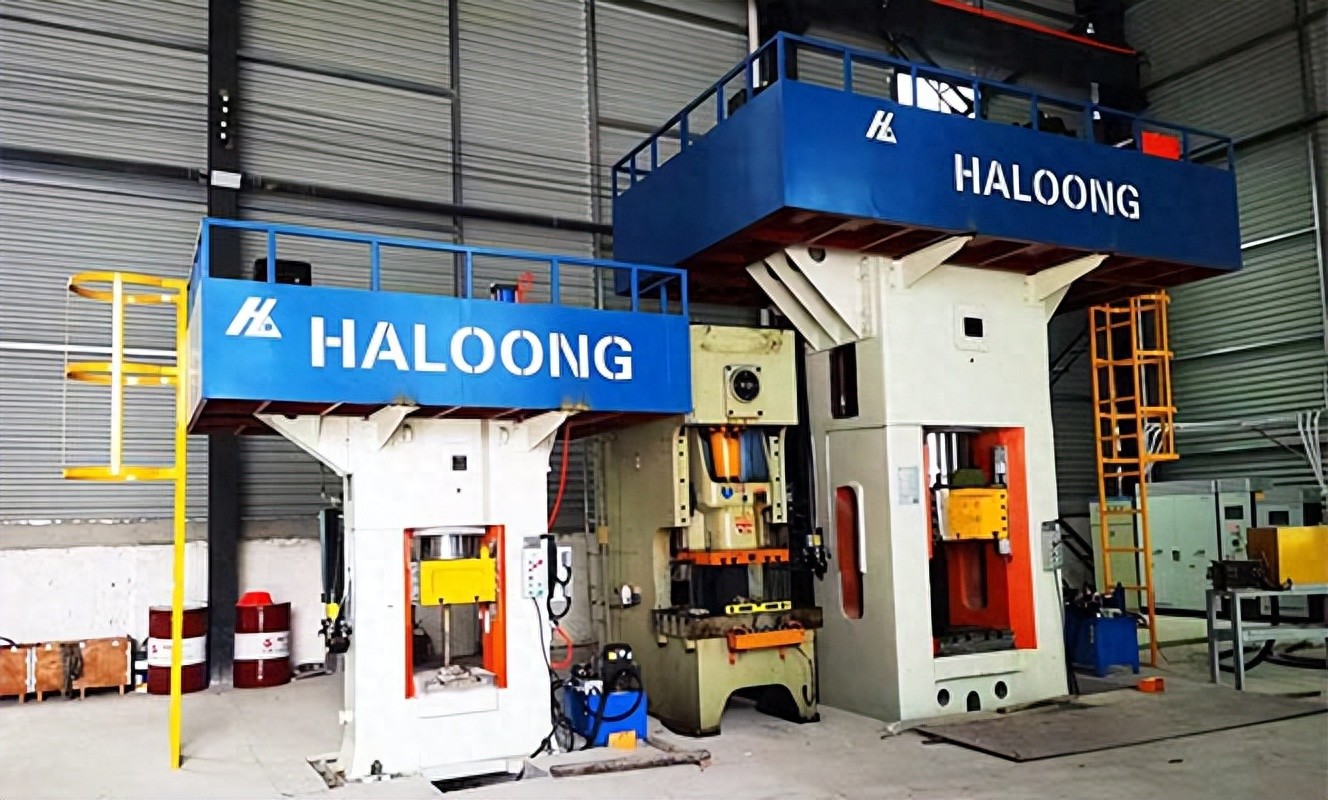
Adopting permanent magnet synchronous servo direct drive technology, Haloong servo screw presses can achieve precise digital control of pressing speed and pressure. This core technology has reached the advanced level of the industry, and can accurately adapt to the dynamic process requirements of "air exhaust-compaction" in refractory forming. By presetting a stepped pressure application process, the equipment can slowly discharge the air inside the green body, avoiding dust spraying with air flow due to excessive exhaust speed, eliminating secondary dust during the production process, ensuring uniform density and compact structure of refractory green bodies, and improving the corrosion resistance and thermal shock resistance of the final products. At the same time, the equipment is built-in with a high-efficiency dust collection device, which is accurately connected with the closed cavity. It can collect a small amount of dust generated during pressing and air exhaust in real time, with a collection efficiency of over 99.9%. The collected dust can be reused in production after treatment, realizing resource utilization of dust, which not only reduces environmental pollution, but also lowers the consumption of refractory raw materials, balancing environmental and economic benefits and helping refractory enterprises reduce costs and improve efficiency.
Targeting the key pain point of dust scattering in the demolding process of refractory forming, Haloong servo screw presses are equipped with a customized demolding dust cover and a negative pressure dust collection system to realize dust-free operation in the demolding process. During demolding, the dust cover closes automatically and the negative pressure system starts synchronously, absorbing the surface dust of green bodies and the dust generated during demolding in real time, avoiding dust scattering on the equipment surface or workshop environment, and preventing dust from adhering to the mold surface and affecting subsequent forming quality. In addition, the equipment adopts flexible demolding technology to reduce friction loss between green bodies and molds, which not only reduces the amount of dust generated during demolding, but also ensures the surface smoothness of refractory green bodies, reduces subsequent cleaning procedures, improves production efficiency, extends the service life of molds, further reduces the production costs of enterprises, and adapts to the demolding needs of various refractory products such as high-alumina, magnesia and carbon refractories.
Following the trend of intelligent transformation in the refractory industry, Haloong servo screw presses are equipped with an independently developed intelligent production management system, which can be seamlessly linked with equipment such as automatic feeding, automatic mold release agent spraying, automatic material picking and centralized dust treatment, building a fully automated dust-free production line and greatly reducing manual operation links. This design not only fundamentally avoids dust diffusion caused by human operation, but also reduces the risk of operators' exposure to dust, effectively preventing occupational diseases such as silicosis and protecting the occupational health of practitioners. Operators can control the equipment operation with one key through the digital control panel, monitor the working status of the dust collection system and forming process parameters in real time, realize automatic management of dust collection and cleaning without frequent manual cleaning, which not only reduces the labor intensity of operators, but also improves production stability. At the same time, the system supports remote monitoring and parameter debugging, which can be flexibly adjusted according to the production layout and process requirements of different refractory enterprises at home and abroad, adapting to the construction needs of "transparent factories" and "smart factories" for high-end refractories.
While strictly controlling dust pollution, Haloong servo screw presses do not reduce production efficiency. On the contrary, relying on the core advantages of servo direct drive technology, they achieve efficient and energy-saving operation – saving more than 55% energy compared with traditional friction presses, with low noise and vibration during operation, further improving the workshop working environment and meeting the construction standards of green factories. The equipment adopts a static pressure transmission structure, featuring low wear and high stability, with a service life twice that of ordinary presses, reducing dust pollution generated during equipment maintenance and lowering the operation and maintenance costs of enterprises; dust-free production reduces the workload of workshop cleaning and equipment maintenance, greatly cutting down the environmental protection investment and labor costs of enterprises. More importantly, dust-free forming can effectively avoid the impact of dust on the quality of refractory green bodies, improve the qualification rate and stability of products, help refractory enterprises produce high-end and refined products, break the technical monopoly of foreign high-end refractory equipment, enhance the domestic and international market competitiveness of products, and promote the transformation of the refractory industry from "high pollution and low efficiency" to "green and high-end".
Green and low-carbon development is the mainstream trend of global industrial development, and also the core direction for the high-quality development of the refractory industry. As a key link in the green transformation of the refractory industry, dust pollution control is not only related to the compliant operation of enterprises and the occupational health of practitioners, but also to the sustainable development of the refractory industry and the supporting capacity of global high-temperature industries. Currently, the refractory industry is accelerating its integrated transformation towards digitalization, intelligence and greenization, with "transparent factories" and "smart factories" becoming new benchmarks for industry development, and dust-free control has become a necessary condition for the production of high-end refractories. Zhengzhou Haloong always adheres to the concept of "green equipment empowering refractories", based on the needs of the refractory industry, continuously deepens the integrated innovation of press dust control technology and servo direct drive technology, constantly optimizes product performance, launches more green forming equipment that meets domestic and international environmental standards and adapts to the production of various refractory products, helps refractory enterprises solve environmental pain points and break through quality bottlenecks, and realizes "dust-free production, low-carbon development, quality improvement and efficiency enhancement".


